Cycling Clothing, Protective Gear and Accessories: The Complete Guide
You do not need a wardrobe of Lycra to enjoy cycling — but the right clothing, protection and a few well-chosen accessories make riding safer, more comfortable and much more fun. This guide explains what matters most, what is optional, and how to dress for every kind of riding and weather.
Start with safety: the helmet
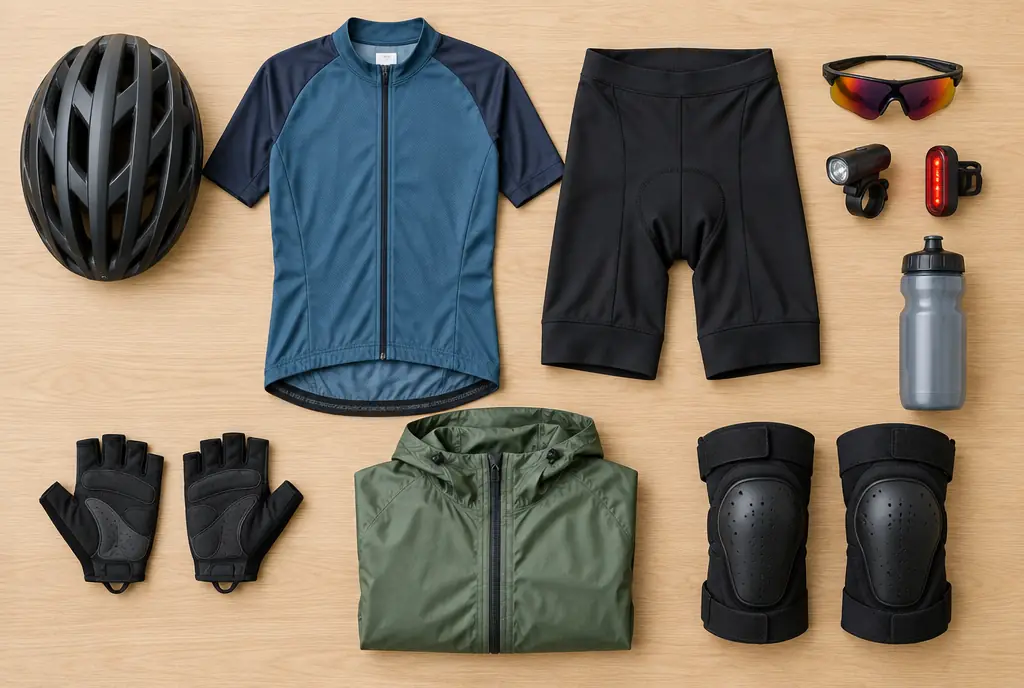
A helmet is the single most important piece of protective gear. Look for one certified to the standard used in your region (for example CPSC in the United States, EN 1078 in Europe or AS/NZS 2063 in Australia and New Zealand).
Types of helmets
- Road helmets — light and well ventilated, designed for speed and heat.
- Mountain bike (trail) helmets — extended coverage at the back of the head and a visor.
- Full-face helmets — include a chin bar; for downhill, enduro and BMX.
- Urban / commuter helmets — casual styling, often with integrated lights.
How to fit a helmet
- It should sit level, about two finger-widths above your eyebrows.
- Tighten the rear dial until it is snug but not painful — it should not rock when you shake your head.
- The side straps should form a "V" just below each ear.
- Buckle the chin strap so no more than one or two fingers fit underneath.
Many helmets now include rotational impact protection systems designed to reduce rotational forces in angled impacts. Replace your helmet after any crash, even if it looks fine, and generally every 3–5 years as materials age.
Cycling clothing: what actually makes a difference
Padded shorts (bib shorts or liners)
If you ride for more than about 45 minutes, padded cycling shorts are the most valuable clothing upgrade. The pad (chamois) reduces pressure and friction. Bib shorts have shoulder straps instead of a waistband and are the most comfortable choice for longer rides. For casual or mountain biking, padded liner shorts can be worn under normal baggy shorts. Cycling shorts are designed to be worn without underwear to avoid seams and chafing.
Jerseys and tops
Cycling jerseys are made from moisture-wicking fabric, cut longer at the back for a riding position, and have rear pockets for snacks and a phone. For casual riding, any moisture-wicking sports top works. Avoid cotton on longer or hotter rides — it holds sweat and becomes cold and heavy.
Layering for changing weather
The smart way to dress for cycling is in layers you can add or remove:
- Base layer — a thin, wicking layer next to the skin (synthetic or merino wool).
- Mid layer — a jersey or thermal long-sleeve for warmth.
- Outer layer — a windproof gilet (vest) or a waterproof, breathable rain jacket.
- Arm and leg warmers — easy to remove and stash in a pocket when the day warms up.
What to wear by temperature
| Temperature | Upper body | Legs | Extremities |
|---|---|---|---|
| Above 20°C (68°F) | Short-sleeve jersey, optional thin base layer | Shorts | Fingerless gloves, sunglasses, cap |
| 15–20°C (59–68°F) | Jersey + arm warmers or gilet | Shorts (knee warmers optional) | Fingerless or light gloves |
| 10–15°C (50–59°F) | Long-sleeve jersey or base layer + windproof vest | Knee or leg warmers, or 3/4 tights | Light full-finger gloves |
| 5–10°C (41–50°F) | Thermal base layer + thermal jacket | Thermal tights | Warm gloves, overshoes, thin cap under helmet |
| Below 5°C (41°F) | Thermal base + insulated winter jacket | Winter tights | Lobster or insulated gloves, winter shoes, neck gaiter, skull cap |
Commuter and casual clothing
For short trips in normal clothes, choose stretchy fabrics that allow movement, tuck in or strap loose trouser legs away from the chain, and carry a packable rain jacket. Many brands make "urban cycling" clothing that looks like everyday wear but includes stretch, reflective details and water resistance. A waterproof pannier or backpack keeps work clothes dry.
Protective gear beyond the helmet
- Gloves — protect your hands in a fall, reduce vibration and improve grip. Fingerless for summer road riding, full-finger for mountain biking and cold weather.
- Eyewear — shields your eyes from sun, wind, insects and grit. Clear or photochromic lenses are useful for low light.
- Knee and elbow pads — recommended for mountain biking, BMX and anyone learning to ride trails.
- Body armor and neck braces — for downhill and bike park riding.
- High-visibility and reflective clothing — especially valuable at dawn, dusk and night. Reflectives on moving parts (ankles, pedals) are the most noticeable to drivers.
Essential accessories
Lights
Lights are essential for riding in the dark and many places require them by law. Use a white front light and a red rear light. For city riding, 200–400 lumens at the front is usually enough to be seen; for unlit roads and trails, 800 lumens or more helps you see the road. Daytime running lights on flash mode make you more noticeable even in daylight.
Locks
Buy the best lock you can afford relative to your bike's value. U-locks (D-locks) and heavy chain locks offer the best security; folding locks are a convenient middle ground; thin cable locks are only for securing wheels or very short stops. Lock the frame and at least one wheel to a solid, immovable object, and use two different types of lock in high-theft areas.
Repair kit
- Spare inner tube (or a plug kit for tubeless tires)
- Tire levers
- Mini pump or CO2 inflator
- Multi-tool with hex keys and a chain tool
- Quick link for your chain
- Patch kit as a backup
Other useful accessories
- Bottle cages and bottles, or a hydration pack for mountain biking.
- Bags: saddle bag for your repair kit, frame bag, handlebar bag, or panniers on a rack for commuting and touring.
- Fenders for wet-weather riding.
- Bell — a legal requirement in some countries and simply polite on shared paths.
- Mirror — helpful for commuters in traffic.
- Bike computer or phone mount for navigation and tracking rides.
- Kickstand for city and utility bikes.
Priority shopping list by budget
| Priority | Item | Why |
|---|---|---|
| 1 — Must have | Helmet, front and rear lights, lock | Safety, visibility, legality and theft prevention |
| 2 — Very useful | Pump, spare tube, levers, multi-tool | Fix flats and small problems on the road |
| 3 — Comfort | Padded shorts, gloves, water bottle and cage | Makes longer rides much more comfortable |
| 4 — Weather | Rain jacket, fenders, arm/leg warmers | Extends your riding season |
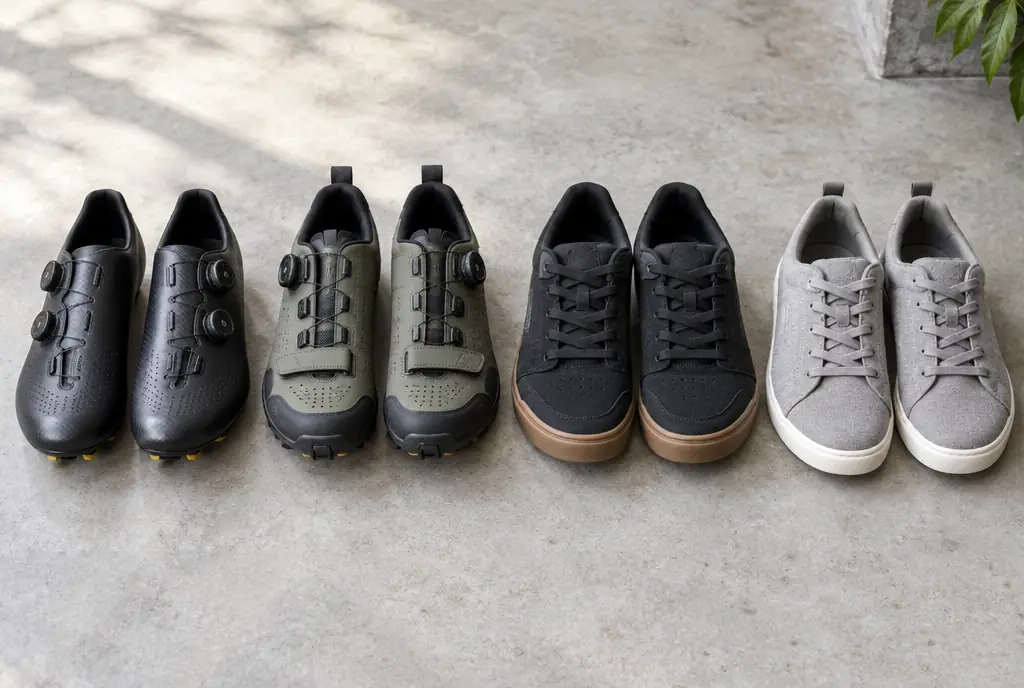
| 5 — Upgrades | Cycling shoes and pedals, bike computer, bags | Efficiency, navigation and carrying capacity |
Caring for your cycling clothing
- Wash padded shorts after every ride, inside out, on a gentle cycle.
- Avoid fabric softener — it clogs technical fabrics and reduces wicking.
- Air-dry rather than tumble-dry to protect elastic and pads.
- Re-proof waterproof jackets with a wash-in or spray-on treatment when water stops beading.
Frequently asked questions
Do you wear underwear with cycling shorts?
No. Cycling shorts are designed to be worn without underwear. Extra seams and fabric cause chafing and trap moisture, which is exactly what the pad is designed to prevent.
What should I wear for my first bike ride?
Comfortable, stretchy sports clothing, a helmet, and sneakers with a firm sole are perfect. Avoid wide trouser legs that could catch in the chain. Add padded shorts once you start riding longer than an hour.
How often should I replace my bike helmet?
Replace it immediately after any crash where it hit the ground, and otherwise every 3–5 years depending on the manufacturer's advice and how much you use it.
How many lumens do bike lights need?
For being seen in lit cities, 100–400 lumens at the front is enough. For seeing the road on unlit routes, aim for 800 lumens or more. Rear lights of 50–100 lumens with a daytime flash mode work well.