Cycling Shoes Guide: Which Shoes Should You Ride In?
Your feet are one of only three contact points with your bike, and the shoes you wear change how comfortable, efficient and in control you feel. Do you need special cycling shoes? What are "clipless" pedals, and why do they clip in? This guide explains every option, from ordinary sneakers to carbon race shoes, and helps you choose the right pair for how you ride.
Do you need cycling shoes at all?
No — plenty of riders never use cycling-specific shoes. For short trips, commuting and casual riding, a pair of sneakers with a firm, grippy sole on decent flat pedals is perfectly fine. Cycling shoes start to make sense when you ride longer or faster, want more control on trails, or find that soft shoes cause foot pain or numbness.
The key difference between normal shoes and cycling shoes is sole stiffness. A stiff sole spreads the pedal's pressure across your whole foot instead of a small point, which improves comfort and transfers power better.
Flat pedals vs clipless pedals
Confusingly, "clipless" pedals are the ones you clip into. The name comes from their replacement of old-fashioned toe clips and straps. A small metal or plastic cleat bolted to the sole of your shoe locks into the pedal; you release by twisting your heel outward.
| Flat pedals | Clipless pedals | |
|---|---|---|
| Shoes | Any shoe; best with flat-pedal shoes | Cycling shoes with cleats |
| Efficiency | Good | Better — consistent foot position, pull through the pedal stroke |
| Control | Easy to put a foot down | Feet stay on over bumps and when sprinting |
| Learning curve | None | A few rides to learn to unclip |
| Walking | Easy | Easy with MTB shoes; awkward with road shoes |
| Best for | Beginners, commuting, casual, freeride and BMX | Road riding, gravel, XC mountain biking, long rides |
Types of cycling shoes
Road cycling shoes
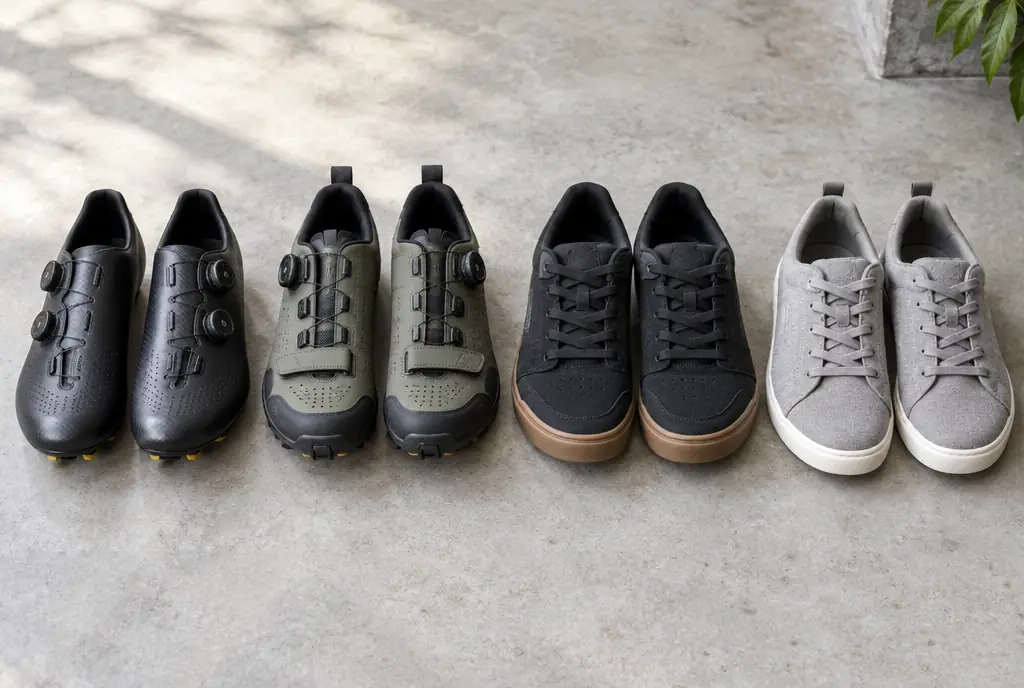
Road shoes have very stiff soles (often carbon on higher-end models), light uppers and a three-bolt cleat pattern for road pedal systems. The large, protruding cleat makes walking awkward, but gives a wide, stable platform for power. Closures are usually rotary dials, Velcro straps or laces.
Best for: road riding, fitness, racing, indoor training. Cleat systems: 3-bolt (common road pedal systems).
Mountain bike clipless shoes
MTB shoes use a small two-bolt cleat recessed into a rubber-lugged sole, so you can walk and push your bike up steep sections. Soles are stiff but slightly less than road shoes, with toe protection and durable uppers.
Best for: mountain biking, gravel, touring, commuting, indoor cycling classes. Cleat systems: 2-bolt (common MTB/SPD-style pedals).
Flat-pedal shoes
These look like skate shoes but have soft, sticky rubber soles that grip pins on flat pedals, plus a stiffer midsole and reinforced toe. They are the choice of trail, enduro, downhill, dirt jump and BMX riders who want to put a foot down quickly.
Best for: trail and gravity mountain biking, BMX, beginners who want grip without clipping in.
Commuter and casual cycling shoes
These look like everyday sneakers or casual shoes, but some hide a recessed two-bolt cleat in the sole. You can clip in for efficiency and still walk into the office normally.
Best for: commuters, touring, café rides.
Winter cycling shoes and overshoes
Winter shoes have insulation, waterproof membranes and high cuffs. Alternatively, overshoes (shoe covers) pull over your regular cycling shoes to block wind and rain — an affordable way to extend your season.
Which shoes for which riding?
| Riding style | Recommended shoe | Pedals |
|---|---|---|
| Casual rides and short commutes | Sneakers with firm soles | Flat pedals |
| Daily commuting, longer distances | Casual SPD-style shoes | Two-bolt clipless, or dual-sided flat/clip pedals |
| Road riding and fitness | Road shoes | Three-bolt road pedals |
| Gravel and bikepacking | MTB/gravel clipless shoes | Two-bolt clipless |
| Cross-country MTB | Stiff XC MTB shoes | Two-bolt clipless |
| Trail, enduro, downhill | Flat-pedal shoes or MTB clipless shoes | Flat pedals with pins, or enduro clipless |
| BMX and dirt jump | Flat-pedal/skate-style shoes | Flat pedals |
| Indoor cycling classes | MTB or road shoes (check the gym) | Often two-bolt or dual pedals |
| Winter riding | Winter boots or shoes + overshoes | As per your riding style |
How to choose the right fit
- Snug but not tight: your heel should not lift, and your toes should have a few millimeters of room to wiggle.
- Try them on later in the day when your feet are slightly larger, wearing the socks you ride in.
- Width matters: many brands offer wide versions. A shoe that is too narrow causes hot spots and numbness.
- Sizing differs by brand — many use European sizes, and half sizes vary. Check each brand's size chart.
- Consider insoles with arch support if you get foot pain on longer rides.
Setting up cleats correctly
Poor cleat position is a common cause of knee pain. As a starting point:
- Position the cleat so the ball of your foot sits over, or just slightly in front of, the pedal axle.
- Align the cleat with your natural foot angle — most people's feet point slightly outward. Walk a few steps and observe.
- Start with "floating" cleats (which allow a few degrees of rotation) to let your knees find their natural path.
- Tighten the bolts firmly, test ride and adjust in small steps. Mark the position with a pen before moving anything.
Socks matter too
Choose thin, moisture-wicking cycling socks in synthetic fibers or merino wool. Cotton socks hold sweat, causing blisters in summer and cold feet in winter. Thicker merino socks are perfect for winter, but make sure your shoes still fit comfortably with them — tight shoes restrict circulation and make feet colder.
Caring for cycling shoes
- Remove insoles and stuff wet shoes with newspaper to dry them — never on a radiator or heater, which can damage glue and shells.
- Check cleat bolts regularly and replace worn cleats; worn cleats release unexpectedly or become hard to unclip.
- Wipe mud off after rides and occasionally hand-wash with mild soap.
Frequently asked questions
Are clipless pedals worth it for beginners?
Not at the very beginning. Start with flat pedals to build confidence. Once you ride regularly for an hour or more, or start riding gravel or cross-country trails, clipless pedals are worth trying for the efficiency and control they offer.
Can I use mountain bike shoes on a road bike?
Yes. Fit two-bolt MTB-style pedals to your road bike and you can use MTB shoes, which are much easier to walk in. You lose a little stiffness and platform size, but many commuters and touring riders prefer this setup.
Should cycling shoes be tight?
They should be snug with no heel lift, but not tight enough to cause pressure points or numbness. Your toes should be able to move slightly.
Can I ride in running shoes?
Yes, for short rides. However, running shoes have soft, flexible soles designed to absorb impact, which can cause foot fatigue and pedal pressure points on longer rides. Shoes with a flatter, firmer sole work better.