Cycling Events and Races Around the World: From the Tour de France to Your First Gran Fondo
Cycling has one of the richest event calendars of any sport. You can watch the world's best riders battle over mountain passes in the Grand Tours — and then ride many of the same roads yourself in a mass-participation event. This guide covers the biggest professional races, the most famous amateur rides, and how to choose and prepare for your first event.
Professional road racing: the Grand Tours
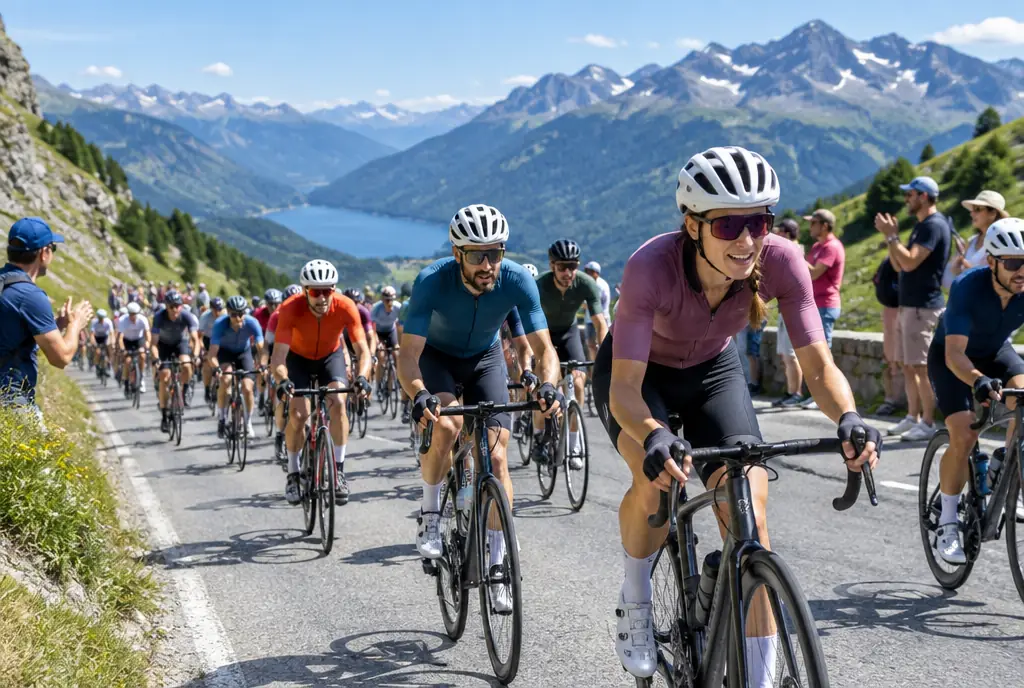
The three Grand Tours are three-week stage races and the most prestigious events in road cycling. Riders race every day across flat stages, mountain stages and time trials, and the rider with the lowest total time wins.
| Race | Country | Usual timing | Leader's jersey | Known for |
|---|---|---|---|---|
| Giro d'Italia | Italy | May | Pink (maglia rosa) | Brutal Alpine and Dolomite climbs, unpredictable weather |
| Tour de France | France | July | Yellow (maillot jaune) | The world's most famous bike race; first held in 1903 |
| Vuelta a España | Spain | Late August – September | Red (la roja) | Steep summit finishes and hot conditions |
Women's racing has grown rapidly, with major stage races such as the Tour de France Femmes, the Giro d'Italia Women and La Vuelta Femenina now broadcast worldwide.
The one-day Classics and the five "Monuments"
One-day races — known as the Classics — are raced over a single, often very long day. The five oldest and most prestigious are called the Monuments:
- Milan–San Remo (Italy, March) — the longest one-day race of the season, often decided by a sprint on the Italian Riviera.
- Tour of Flanders (Belgium, April) — short, steep cobbled climbs and passionate Belgian crowds.
- Paris–Roubaix (France, April) — "the Hell of the North", famous for its rough cobblestone sectors.
- Liège–Bastogne–Liège (Belgium, April) — the oldest Classic, with hilly terrain in the Ardennes.
- Il Lombardia (Italy, October) — the "race of the falling leaves" around Lake Como.
World Championships and the Olympics
The UCI Road World Championships are held each year in a different country, and the winner earns the right to wear the rainbow jersey for the following year. The UCI also runs World Championships for track, mountain bike, cyclocross, BMX and gravel.
At the Olympic Games, cycling includes road racing and time trials, track cycling in the velodrome, cross-country mountain biking, and BMX racing and freestyle.
Mountain bike, gravel and other disciplines
Mountain biking
- UCI Mountain Bike World Cup — international series for cross-country, downhill and enduro.
- Absa Cape Epic (South Africa) — a famous multi-day stage race ridden in teams of two.
- Leadville Trail 100 MTB (Colorado, USA) — a legendary high-altitude 100-mile race.
- Crankworx — a festival of freeride, slopestyle and downhill events held at several venues, including Whistler in Canada.
- Red Bull Rampage (Utah, USA) — an invitation-only freeride event on giant desert cliffs.
Gravel
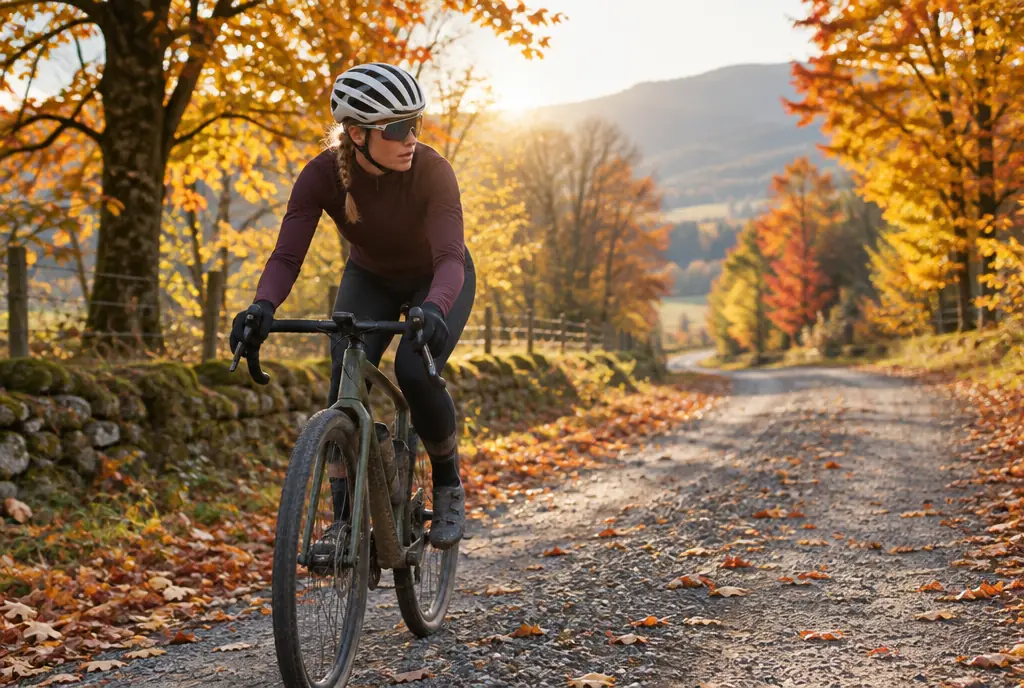
Gravel racing has exploded in popularity. Unbound Gravel in Kansas, USA — with its flagship 200-mile distance — is one of the most famous, and the UCI now runs a Gravel World Series and World Championships. Gravel events are known for a relaxed, inclusive atmosphere where amateurs start alongside professionals.
Cyclocross
Cyclocross races are short, intense laps on muddy, grassy circuits with obstacles that force riders to dismount and run. The sport is hugely popular in Belgium and the Netherlands, with a winter World Cup series.
Track cycling
Track racing takes place on steeply banked velodromes. Events include sprints, keirin, team pursuit and the omnium. Look for the UCI Track Champions League and national championships.
Amateur and mass-participation events
You do not need a racing license to ride many of the world's greatest cycling events. These are the main formats:
- Gran fondos and sportives — timed, long-distance rides on closed or partly closed roads with feed stations and support. Usually offer several distances.
- Charity rides — fundraising rides for all abilities, from 20 km family routes to multi-day challenges.
- Audax / randonneuring — self-supported long-distance rides with checkpoints and time limits, from 100 km to 1,200 km and beyond.
- Gravel events — mixed-surface rides and races, often with a festival atmosphere.
- Bikepacking races — self-supported ultra-distance routes over days or weeks.
- City "car-free" tours — relaxed rides through city streets closed to traffic.
Famous amateur events around the world
| Event | Location | What it is |
|---|---|---|
| L'Étape du Tour | France | Ride a full mountain stage of the Tour de France on closed roads |
| Maratona dles Dolomites | Italy | Iconic sportive over famous Dolomite passes |
| Tour of Flanders sportive | Belgium | Ride the cobbled climbs the day before the pro race |
| Paris–Roubaix Challenge | France | Experience the legendary cobbles yourself |
| Vätternrundan | Sweden | Around 300 km around Lake Vättern, one of the world's largest recreational rides |
| Cape Town Cycle Tour | South Africa | Among the largest timed cycling events in the world |
| Paris–Brest–Paris | France | Historic 1,200 km randonnée held every four years |
| Unbound Gravel | USA | Gravel rides and races from 25 to 200+ miles |
| TD Five Boro Bike Tour | USA | Car-free tour through all five boroughs of New York City |
| Haute Route | Various | Multi-day timed events in the Alps, Pyrenees and beyond |
How to choose your first cycling event
- Pick a realistic distance. If your longest ride is 40 km, choose an event of 50–80 km, not 160 km. Most sportives offer short, medium and long routes.
- Check the climbing. Total elevation gain matters as much as distance. 1,000 m of climbing on a 100 km route is moderate; 3,000 m is very hard.
- Look at the time limits and cut-off points for each route.
- Start local. A nearby event avoids travel stress and lets you ride familiar roads.
- Register early — famous events can sell out months in advance or use a ballot.
How to prepare: a simple 8–12 week plan
- Build consistency: ride 3–4 times a week, with one long ride each weekend.
- Increase gradually: add around 10% to your long ride each week, with an easier week every 3–4 weeks.
- Practice climbing if your event is hilly, and learn to pace yourself — steady effort beats surging.
- Train your fueling: practice eating and drinking on the bike. A common guide is to eat something every 30–45 minutes on long rides.
- Ride in groups to learn to ride safely close to others.
- Taper in the final week: shorter, easier rides so you arrive fresh.
Event-day checklist
- Bike serviced a week before (not the day before)
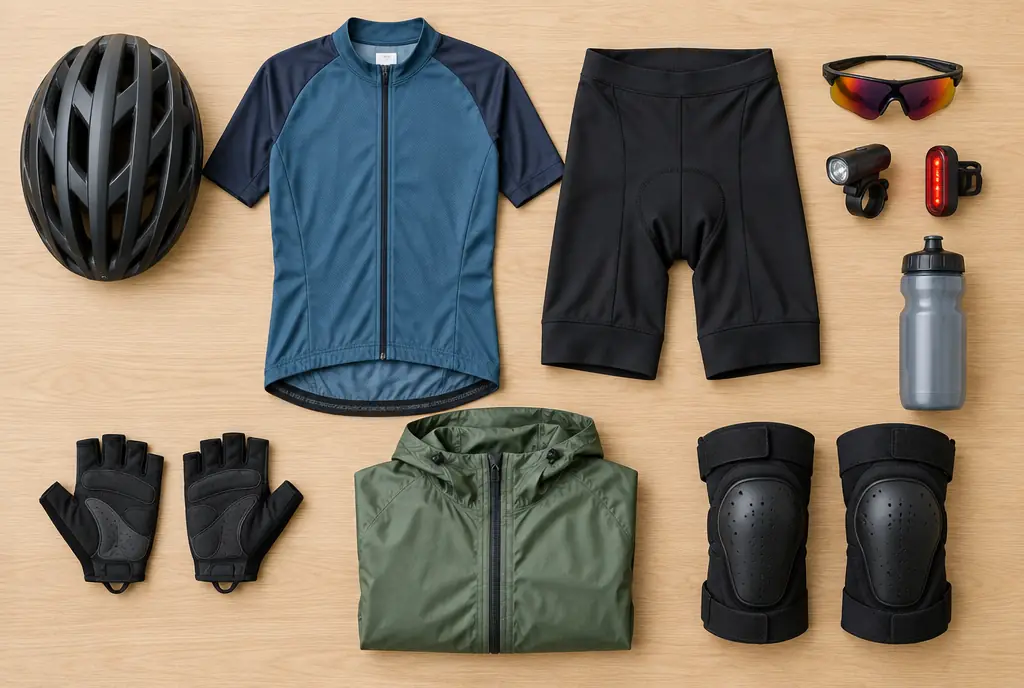
- Tires checked, spare tube, levers, pump or CO2, multi-tool
- Helmet, race number, timing chip and safety pins
- Bottles filled, snacks packed, and a familiar breakfast
- Clothing for the forecast, plus a packable rain layer
- Phone, ID, emergency contact and some cash or a card
- Arrive early; start conservatively and enjoy it
Choosing the right bike for your event matters — see our types of bikes guide, and make sure it is in top condition with our maintenance guide.
Frequently asked questions
What is a gran fondo?
A gran fondo (Italian for "big ride") is a long-distance, mass-participation road event, usually timed, with feed stations and mechanical support. Riders of all levels take part, and most events offer several route lengths.
Can amateurs ride the Tour de France route?
Yes. L'Étape du Tour lets amateur riders ride a complete stage of the Tour de France on closed roads, usually a few days before the professionals race it.
Do I need a racing license to enter cycling events?
Most sportives, gran fondos, charity rides and gravel events do not require a license. Some races require a national federation license or a one-day license purchased with your entry.
What is the most famous bike race in the world?
The Tour de France, first held in 1903, is the best-known bike race in the world, followed by the other Grand Tours — the Giro d'Italia and the Vuelta a España — and the one-day Monuments such as Paris–Roubaix.